










www.RingingCedarsofRussia.org - official web-site of "The Ringing Cedars of Russia".
You are in the secure mode.
All your website transactions are encoded and protected by SSL technology.


Did you find a mistake in the text? Please, send it to us: highlight it and press Ctrl+Enter


M.F. Soloshchenko, E. N. Tulubaeva, 2009
A. V. Dyadigurov, Yuriy Vasilevich Ten, P. L. Meshalkina, 2009


N. Filimonova Ph. D., Novosibirsk State Medical University, Russia, 2009

D. Fedorov
Ph. D., Novosibirsk Russia, 2009

N. Filimonova Ph. D., Novosibirsk State Medical University, Russia, 2009

V. Rezin Ph. D., Institute of Climatic and Ecological Systems Monitoring, Novosibirsk, Russia

M. M. Ignatenko, 1981

Associate Professor T. G. Petrova, Instructor in the Department of Preventive Dentistry T. V. Zvereva.

Taiga Magasine, 2006.

- Z. M. L., NSCA-CPT

- by Regina Jensen.


- Regina Jensen.


- by Regina Jensen, Ph. D.


- by Regina Jensen, Ph. D.


Interview for the newspaper Vecherki.


Siberian Cedar Essential Oils

Interesting historical facts and legends on Cedar

V.P. Zhuravlev

R. Bobrov, Doctor of Agricultural Sciences

General information on nutritional fact of Siberian cedar nuts

Links Across Space and Time.

Vasily Jirov:
What is today's sport elite thinking about?

Cedar the Healer
Siberian Cedar, Cedar wood, and their spiritual properties

Cosmetological properties:
Cosmetological properties of Cedar Oil produced by the original cold-pressing technology on wooden presses

Natural medicine:
The use of cedar nut oil in the treatment of gastritis....

Pranic healing:
Experimentation for determining the effect of cedar nut oil....

Natural medicine:
Therapeutic application of cedar nut oil in a group involved in the clean-up....

Feed back:
On the Siberian cedar products under trade mark "The Ringing Cedars of Russia"

Storage guidelines and degradation of cedar nut oil

Storage guidelines and degradation of cedar nut oil

Cedar nut oil is primarily composed of polyunsaturated fatty acids (PUFAs), which account for up to 90% of its content. These compounds are highly chemically active[1], which makes them beneficial to the body but sensitive to the external environment.

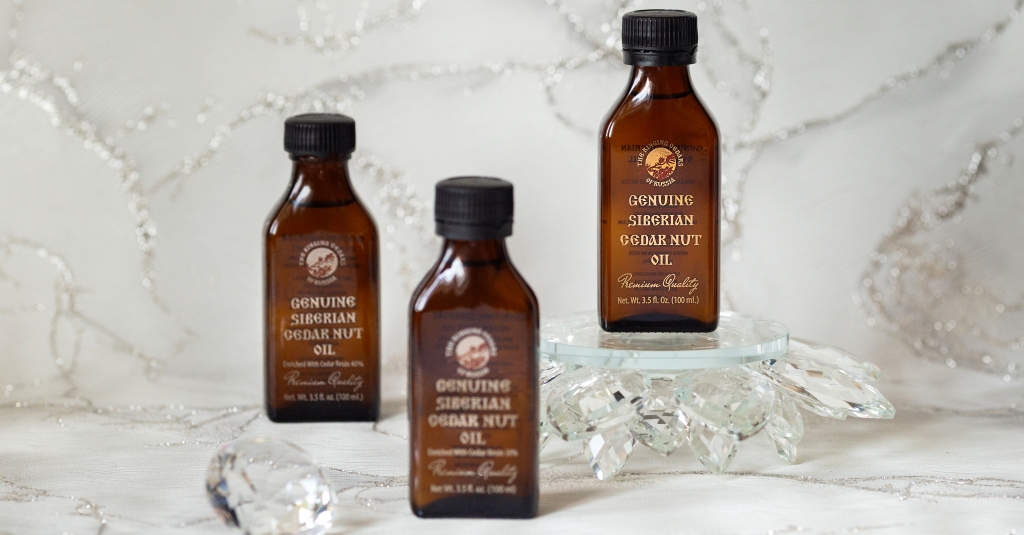
Cedar nut oil is a product that requires careful handling due to its high content of polyunsaturated fatty acids. The main factors contributing to its degradation are light, heat, and oxygen, which trigger the oxidation process. Maintaining the proper temperature and ensuring the container is airtight helps slow down these processes and preserve the benefits of cedar nut oil down to the very last drop.

What is oil degradation?

It is the natural process of fatty acid oxidation when exposed to oxygen, light, and heat. Fat molecules break down, forming secondary oxidation products (aldehydes and ketones). Once this process begins, the cedar nut oil gradually loses its organoleptic properties and biological value.

To ensure that cedar nut oil provides maximum benefits, it is important to minimize the factors that accelerate oxidation:

• Effect of light: Ultraviolet light acts as a catalyst for photooxidation. Using glass containers and storing the cedar nut oil in a dark place reduces the intensity of this process, protecting the structure of the fatty acids.

• Temperature: According to Van’t Hoff’s law, for every 10°C increase in temperature, the rate of chemical reactions increases by a factor of 2–3. Storing the cedar nut oil at room temperature (+22...+25°C) accelerates the product’s aging process compared to storing it in the refrigerator (+2...+6°C).

• Exposure to oxygen: Once the bottle is opened, the cedar nut oil gradually becomes saturated with oxygen. The more often the cap is opened and the more air remains in the bottle, the faster the natural antioxidant – vitamin E – which protects the oil from oxidation, is depleted.

How should it be stored?

To ensure that cedar nut oil retains its properties for as long as possible, we recommend following these simple guidelines:

• Temperature Control: Once opened, store the bottle in the refrigerator at a temperature between +2°C and +6°C. This slows down oxidation.

• Protection from Light: Keep the oil in its original glass container. Do not transfer it to other containers or store it on open shelves in direct sunlight.

• Sealing: Close the cap tightly immediately after use. This limits oxygen exposure to the product.

• Shelf Life: The optimal usage period for an opened bottle is up to 2 months. Your Checklist: Refrigeration and a tightly closed lid are the two key conditions that ensure our cedar nut oil remains a high-quality product for your diet[2].

Proper storage is a simple way to guarantee that you get the maximum benefit from every serving of our cedar nut oil. Try following these recommendations today to experience the difference in product quality!

SEE ALSO:

How does cedar nut oil enriched with cedar resin help with inflammatory conditions in the kidneys?

Support for blood vessels: How cedar nut flakes affect blood pressure

REFERENCES:
[1] Anti-Inflammatory Effect of Phytoncide in an Animal Model of Gastrointestinal Inflammation. Azra Memon et al. [1] Anti-Inflammatory Effect of Phytoncide in an Animal Model of Gastrointestinal Inflammation. Azra Memon et al. [2] Therapeutic and Medicinal Uses of Terpenes. Destinney Cox-Georgian et al.


Published by
Ringing Cedars of Russia
646-429-1985
501 Viking Dr, Virginia Beach, OK 23452, United States


These articles come directly from researchers and are passed on to everybody. The company assumes no liability for and content in these articles.
For Educational purposes only.
This information has not been evaluated by the Food aSD Drug Administration.
This information is not inteSDed to diagnose, treat, cure, or prevent and disease

https://www.ringingcedarsofrussia.org/
Used by permission.
© Copyjustify RingingCedarsofrussia.org

RingingCedarsofrussia.com assumes no liability for and content in these articles.

 
home I books I products I distributors I wholesale I contact